

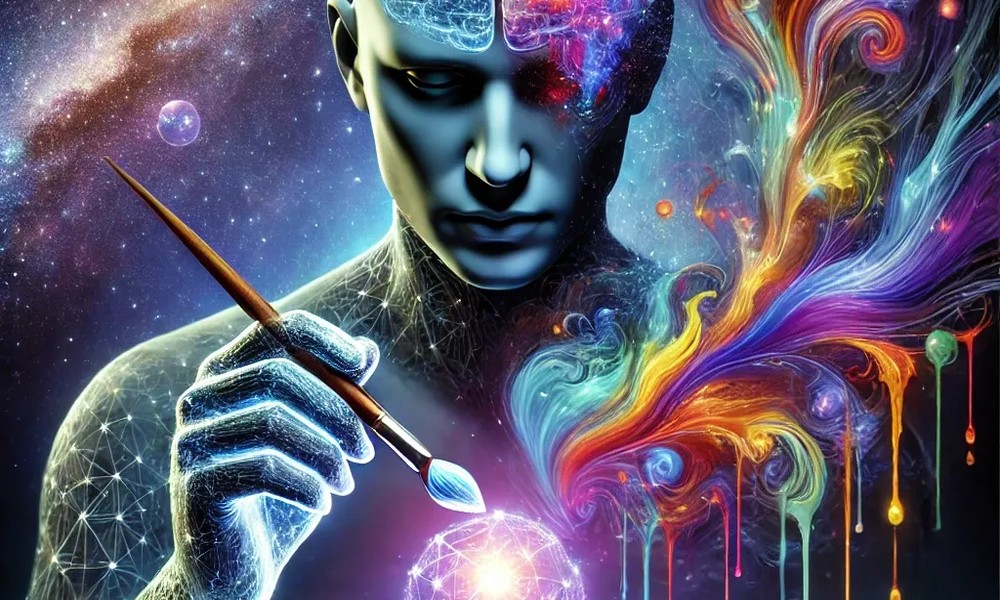
Marathalli, the bustling tech hub of Bangalore, is a vibrant neighbourhood where innovation and intellect intersect. One recurring question echoes amid conversations in cafés, coworking spaces, and tech parks: Can artificial intelligence be genuinely creative, or is it just mimicking human ingenuity? As businesses and students flock toward the promise of AI-driven possibilities, this philosophical and technological debate is more relevant than ever. Especially for learners enrolling in an AI course in Bangalore, understanding the nuances of AI’s role in creativity is fundamental.
Understanding AI and the Nature of Creativity
We must first unpack what creativity means to answer whether AI can be creative. Traditionally, creativity involves producing something novel, valuable, and unexpected. Whether painting, composing music, or writing a poem, creativity is often linked to human emotion, experience, intuition, and the ability to derive insights from abstract associations.
AI, on the other hand, is data-driven. It processes vast amounts of information, identifies patterns, and generates outputs based on algorithms and training data. When a machine writes a poem, composes music, or paints an image, it analyses previous works and combines elements in novel ways. But is this genuine creativity-or a sophisticated form of mimicry?
AI in the Creative Landscape: Real-World Applications
Over the past decade, AI has found a strong foothold in the creative industries:
- Art: Tools like DALL·E, DeepArt, and Runway ML allow AI to generate original artwork. AI-generated paintings have even sold for thousands of dollars at auctions.
- Music: Platforms such as Amper Music and AIVA compose music based on user inputs. From background scores to entire symphonies, AI is revolutionising music production.
- Writing: GPT-based tools can now craft poems, scripts, short stories, and even novels. News agencies also use AI to write factual reports and summaries.
- Fashion: AI is helping designers predict trends, create new apparel designs, and even develop entirely new aesthetics based on data analysis.
While the outputs are undeniably impressive, critics argue that AI lacks intention, emotion, and self-awareness-elements that form the soul of true creativity.
Creativity vs. Imitation: Where AI Excels
At the heart of this debate lies the distinction between creativity and imitation. AI excels at what cognitive scientist Margaret Boden calls “combinational creativity”-combining familiar ideas in unfamiliar ways. AI can remix styles, reframe contexts, and introduce variations that can surprise even seasoned artists.
However, AI’s creativity is still confined to the boundaries of its training data. If an AI has never been exposed to a particular form of expression or cultural nuance, it cannot spontaneously invent it. It lacks the conscious purpose behind the creation. It doesn’t understand “why” it creates-only “how.”
As learners enrolled in an AI course in Bangalore soon discover, AI’s output depends entirely on its input. While it can produce what looks like creativity, the absence of intent, awareness, and subjective experience keeps it tethered to imitation rather than true innovation.
The Human-AI Collaboration: Enhancing Creativity, Not Replacing It
Instead of viewing AI as a rival to human creativity, viewing it as a creative collaborator may be more productive. In many fields, AI is augmenting the creative process rather than replacing it.
- Writers use AI tools to brainstorm plots, overcome writer’s block, or automate repetitive tasks.
- Musicians experiment with AI-generated loops or melodies to spark new compositions.
- Designers use AI to iterate concepts quickly and visualise complex ideas.
This synergy can lead to “co-creativity,” where humans and machines combine their strengths-intuition and intention from humans, pattern recognition and speed from AI-to produce something greater than either could alone.
Even in Marathalli’s classrooms, educators are using AI tools to generate personalised learning experiences, aiding students of design, film, and literature in unlocking their own creative potential. This is especially relevant for those pursuing an artificial intelligence course in Bangalore, where interdisciplinary projects increasingly blend code with creativity.
Midway Milestone: AI’s Expanding Role in Innovation
As AI systems evolve, they cross into “exploratory creativity”, suggesting possibilities outside their training data by generating new techniques, styles, or hypotheses. AI researchers are working on generative adversarial networks (GANs), reinforcement learning models, and neural-symbolic systems that push the boundaries of what machines can “imagine.”
In scientific fields, AI hypothesises new molecules or materials humans haven’t considered. Does this qualify as creativity? Possibly, but again, the lack of consciousness or intrinsic motivation is the limiting factor.
Students must understand this grey zone where imitation blends with innovation, as it’s where future research and development will be focused.
Philosophical Considerations: What Makes Creativity Human?
Even if AI can replicate creative outcomes, it raises philosophical questions: Can an entity without emotions, consciousness, or subjective experience be truly innovative? Creativity in humans is often influenced by emotions, cultural contexts, personal memories, and even irrational insights.
Furthermore, human creativity is tied to purpose-a desire to express, communicate, challenge, or innovate. Until AI can develop self-awareness or subjective purpose, many argue that it cannot be truly creative. It remains a mirror-albeit very clever-reflecting and refracting human knowledge and ideas.
Conclusion: A Mirror, Not a Muse
So, can AI be truly creative-or just convincingly imitative? The answer lies somewhere in between. AI is not a muse but a mirror that reflects our collective creativity, knowledge, and culture. It can surprise, support, and even inspire us-but it cannot replace the messy, emotional, irrational, and profoundly human process of creation.
Marathalli, with its fusion of tech and talent, is the ideal place to explore this ongoing evolution. For those aspiring to be at the forefront of this intersection between technology and creativity, enrolling in an artificial intelligence course in Bangalore isn’t just a career move-it’s a journey into the future of human expression.
For more details visit us:
Name: ExcelR – Data Science, Generative AI, Artificial Intelligence Course in Bangalore
Address: Unit No. T-2 4th Floor, Raja Ikon Sy, No.89/1 Munnekolala, Village, Marathahalli – Sarjapur Outer Ring Rd, above Yes Bank, Marathahalli, Bengaluru, Karnataka 560037
Phone: 087929 28623
Email: enquiry@excelr.com
