


 Posted On
6 Best Ways for Students to Learn Spanish Effectively
 Posted On
Posted By Mike Rodriguez
Bilingual education offers countless benefits to learners of all ages. Research has shown that learning a second language from an early age enhances flexible thinking, strengthens problem-solving abilities, and improves overall academic performance. Students who study another language via Spanish immersion programs in elementary schools often achieve higher scores in math, logic, and even English. They also tend to learn additional languages more easily in the future.
If you’re considering a multicultural education for your child—whether in preschool, elementary, or middle school—explore these six effective ways for students to learn Spanish. These strategies can help lay the foundation for fluency and spark a lifelong love of languages.
Connect With Others
Engaging in casual conversations with native speakers gives students valuable real-world practice. Children can connect with language mentors either in person or through online platforms, allowing them to experience authentic pronunciation and natural dialogue.
A modern twist on the traditional pen-pal exchange can also work wonders. Instead of handwritten letters, students can exchange emails with peers who speak Spanish and are learning English. This mutual exchange benefits both groups and fosters cultural understanding.
Parents can also take an active role by learning Spanish alongside their child. Practicing together creates a shared learning experience that is both fun and motivating. Interacting in a new language strengthens family bonds while improving communication skills.
Make It Fun
Learning a language doesn’t have to be boring. Gamification has revolutionized education by adding fun and competition to learning. Language apps that reward students with points, badges, or levels can make mastering vocabulary and grammar more engaging.
Motivation also plays a key role in success. Understanding why a student wants to learn Spanish—whether to communicate while traveling, connect with new friends, or explore another culture—helps fuel consistent effort and enthusiasm.
You can also make Spanish part of leisure activities. Watch cartoons, movies, or videos in Spanish, or play games in the target language. Adding English subtitles helps with understanding while improving listening skills. Students might not catch every word, but they’ll become familiar with the rhythm and tone of the language.
Encourage students to choose how they practice. They could draw a comic strip in Spanish, record a podcast, or write and perform a song. Allowing personal creativity makes learning natural and enjoyable.
Take a Holistic Approach
Rather than limiting language learning to a single class, incorporating Spanish throughout different subjects leads to greater success. Studies show that students who learn academic content—like math or science—in another language tend to perform better and show higher motivation than those in traditional language-only classes.
This holistic approach immerses learners in the language naturally. Teaching drama, literature, music, or art in Spanish allows students to use vocabulary in meaningful, real-world contexts. Reading newspapers, watching films, and playing games in Spanish all reinforce fluency and comprehension.
When students engage with authentic content instead of just textbooks, they gain not only language skills but also cultural awareness and critical thinking abilities.
Assign Practical Projects and Tasks
Traditional rote memorization and grammar drills often fail to capture students’ attention. Instead, hands-on tasks make learning interactive and effective. For example, students could watch a video about Spanish folk songs and work together to translate and interpret the lyrics.
Roleplaying is another excellent method. Students can simulate real-life situations—such as shopping, ordering food, or asking for directions—using only Spanish. Switching roles keeps everyone engaged and builds practical speaking confidence.
Grouping vocabulary by theme also enhances retention. Parents can support this method at home by introducing words based on familiar topics. One week, learn food-related vocabulary; the next, focus on words used at an amusement park. These themed activities help create mental associations that make learning more natural and enjoyable.
Prioritize Consistency and Immersion
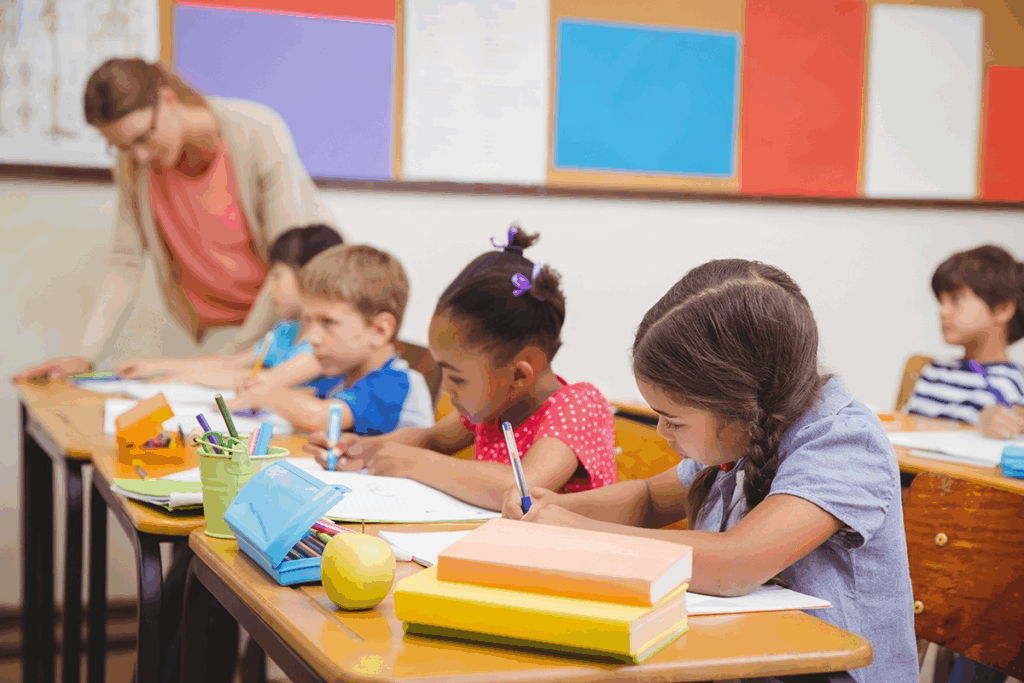
Fluency doesn’t happen overnight, but steady exposure to the language accelerates learning. Daily practice, even in short bursts, helps students develop listening and speaking confidence. Experts emphasize consistency and relevance—students learn best when lessons connect to their interests and daily lives.
For young children, short and varied sessions work best. Alternating between singing, storytelling, art, and vocabulary games every few minutes keeps them focused and engaged.
Repetition is essential. Hearing and using the same words in different situations helps learners internalize grammar and pronunciation. Parents can reinforce learning by integrating Spanish into daily routines. Encourage your child to use simple phrases while brushing teeth, eating breakfast, or putting on shoes.
Embrace the Four Cycles of Learning
Language learning progresses through developmental stages that align with age and experience. The four general cycles of Spanish learning can be summarized as follows:
Cycle 1: Immersion (Preschool–Kindergarten)
At this stage, children are fully immersed in the target language. Most instruction takes place in Spanish, helping young learners build a natural foundation for comprehension and pronunciation.
Cycle 2: Solidifying the Knowledge Base (Grades 1–2)
Students continue learning most subjects—such as science, math, music, and art—in Spanish while receiving structured literacy instruction in their first language. This balance strengthens bilingual proficiency and academic understanding.
Cycle 3: Expanding the Knowledge Base (Grades 3–5)
By this point, many students achieve real fluency and may even explore additional languages. Lessons continue to deepen their vocabulary, grammar, and cultural knowledge through a variety of subjects and projects.
Cycle 4: Embedding Global Concepts (Middle School)
Older students begin integrating global citizenship and intercultural understanding into their studies. While English becomes more prominent, students continue receiving a significant portion of their instruction in Spanish. This ensures that bilingual skills remain sharp while developing critical thinking and global awareness.
Conclusion
Learning Spanish offers students a pathway to greater cognitive flexibility, cultural appreciation, and academic achievement. By connecting with native speakers, using interactive methods, and maintaining consistent practice, learners develop both linguistic and interpersonal skills that last a lifetime.
A balanced mix of fun, immersion, and real-world application makes Spanish learning both effective and enjoyable. Whether through games, creative projects, or cross-curricular study, students can gain the confidence and fluency needed to thrive in an increasingly globalized world.